Socrates: A classical Greek philosopher, Socrates was a key figure in the development of Western philosophy. He is best known for his contributions to ethics and the Socratic method of questioning.
Plato: A student of Socrates, Plato was a philosopher in ancient Greece. He founded the Academy in Athens, where he taught Aristotle. Plato's writings, including dialogues like "The Republic," have had a profound influence on Western philosophy.
Aristotle: A student of Plato, Aristotle was a philosopher and polymath. He made significant contributions to various fields, including ethics, metaphysics, politics, and biology. Aristotle's works have had a lasting impact on Western thought.
Alexander the Great: Also known as Alexander III of Macedon, he was a king of Macedonia and one of the most successful military commanders in history. Alexander conquered a vast empire that stretched from Greece to Egypt and into present-day Pakistan.
Monday, December 4, 2023
Socrates->Plato->Aristotle->Alexander the Great

Who are the major poets in Victorian age?
Alfred Lord Tennyson: He served as the Poet Laureate during much of Queen Victoria's reign and wrote iconic works like "The Charge of the Light Brigade" and "In Memoriam."
Robert Browning: Known for his dramatic monologues, Browning's notable works include "My Last Duchess" and "The Ring and the Book."
Elizabeth Barrett Browning: Renowned for her sonnet sequence "Sonnets from the Portuguese" and her verse novel "Aurora Leigh."
Christina Rossetti: An influential poet, known for works like "Goblin Market" and "In the Bleak Midwinter."
Matthew Arnold: His poems, such as "Dover Beach" and "The Scholar Gipsy," reflect his concerns about the changing times.
Emily Brontë: While best known for her novel "Wuthering Heights," Brontë also wrote poetry, including haunting works like "No Coward Soul Is Mine."
Thomas Hardy: Initially a poet before becoming a novelist, Hardy's poems include "The Darkling Thrush" and "Hap."
Gerard Manley Hopkins: Known for his innovative use of language and rhythm, his notable poems include "Pied Beauty" and "The Windhover."
Algernon Charles Swinburne: A poet and critic, Swinburne's works include "Atalanta in Calydon" and "Poems and Ballads."
Dante Gabriel Rossetti: A founder of the Pre-Raphaelite Brotherhood, his poems include "The Blessed Damozel" and "Goblin Market."
Monday, September 4, 2023
India's union territories
It appears that you're looking for information related to India's union territories. India is divided into states and union territories, each with its own administrative and governance structure. As of my last knowledge update in September 2021, here is a brief overview of India's union territories:
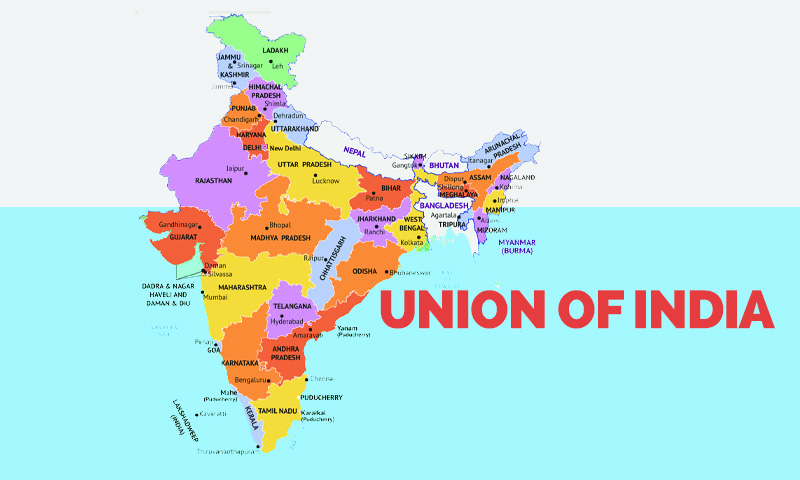
Andaman and Nicobar Islands: Located in the Bay of Bengal, these islands are a popular tourist destination known for their natural beauty and biodiversity.
Chandigarh: Chandigarh serves as the capital of both Haryana and Punjab. It is one of the planned cities in India and is known for its modern architecture and design.
Dadra and Nagar Haveli and Daman and Diu: These two union territories were merged into one on January 26, 2020. They are located on the western coast of India.
Lakshadweep: This is a group of islands in the Arabian Sea, and it is the smallest union territory in terms of both area and population.
Delhi (National Capital Territory of Delhi): Delhi serves as the national capital of India and is a union territory with its own legislative assembly and government.
Puducherry: Also known as Pondicherry, it is located on the southeastern coast of India. Puducherry consists of four unconnected districts: Puducherry, Karaikal, Mahe, and Yanam.
Ladakh: Ladakh was carved out of the former state of Jammu and Kashmir and became a union territory on October 31, 2019. It is located in the northern part of India and is known for its stunning landscapes.
Ladakh: Ladakh was carved out of the former state of Jammu and Kashmir and became a union territory on October 31, 2019. It is located in the northern part of India and is known for its stunning landscapes.
Tuesday, August 22, 2023
How Wormholes Work?
Wormholes are theoretical concepts in physics that propose a shortcut or tunnel-like connection between two separate points in spacetime. They have been popularized by science fiction but are purely speculative at this point, as they have not been observed or proven to exist. The idea of wormholes is rooted in the equations of Einstein's general theory of relativity, but several challenges and limitations make their practical existence uncertain.
Here's a simplified explanation of how wormholes are theorized to work:
Spacetime Curvature: According to Einstein's theory of general relativity, massive objects warp spacetime around them. This warping is what we perceive as gravity. Imagine placing a heavy ball on a rubber sheet – it causes the sheet to curve around it. Similarly, massive objects like stars and black holes cause spacetime to curve around them.
Einstein-Rosen Bridges: The concept of a wormhole arises from solutions to Einstein's equations that suggest it might be possible to connect two separate points in spacetime through a tunnel-like structure called an Einstein-Rosen bridge. These bridges are often visualized as tunnels or tubes connecting two distant regions of the universe.
Throat and Exotic Matter: In order to keep a wormhole stable and prevent it from collapsing, theoretical models propose the existence of "exotic matter" with negative energy density. This exotic matter would counteract the gravitational forces trying to close the wormhole. However, exotic matter with these properties has not been observed and remains speculative.
Traversal and Time Travel: If a traversable wormhole could be stabilized, it might offer a shortcut between two points in spacetime. It's important to note that, depending on how a wormhole is connected, it could potentially allow for time travel or causal paradoxes. However, the physics of time travel and causality is highly complex and uncertain, and it's not clear if such scenarios are possible.
It's crucial to understand that while the idea of wormholes is intriguing, there are several significant challenges and issues that need to be addressed:
Stability: Wormholes, as originally theorized, are inherently unstable and would likely collapse before anything could pass through them. Stabilizing them would require exotic matter, which remains speculative.
Exotic Matter: The existence of exotic matter with negative energy density is purely theoretical and has never been observed. The properties and behavior of such matter are not well understood.
Energy Requirements: The energy required to create or manipulate a wormhole is likely to be immense, potentially exceeding anything we can currently conceive of.
Causality and Paradoxes: If wormholes were traversable and allowed for time travel, it could lead to paradoxes like the famous "grandfather paradox," where a person could potentially travel back in time and prevent their own grandparents from meeting, thus negating their own existence.
In summary, while wormholes are fascinating and have captured the imagination of scientists and science fiction enthusiasts alike, they remain theoretical constructs with many unresolved challenges. Much more research and understanding of the fundamental laws of physics would be needed to determine if wormholes are physically possible and if their properties align with our current understanding of the universe.
Universe Dark Energy-1 Expanding Universe
Dark energy is a theoretical form of energy that is thought to be responsible for the observed accelerated expansion of the universe. It's a concept in cosmology, the study of the large-scale structure and evolution of the universe.
The idea of dark energy emerged from observations of distant supernovae in the late 1990s. These observations indicated that the universe's expansion was not slowing down as expected due to the gravitational pull of matter, but rather it was accelerating. This phenomenon couldn't be explained by the known forms of matter and energy, such as normal matter and radiation.
Dark energy is hypothesized to be a form of energy that permeates all of space and has a repulsive gravitational effect, pushing galaxies and other cosmic structures apart from each other. It's often associated with a property known as negative pressure or negative energy density. This negative pressure would counteract the attractive force of gravity, causing the universe's expansion to accelerate.
The exact nature of dark energy is still one of the biggest mysteries in modern cosmology. There are several hypotheses about what dark energy could be:
Cosmological Constant (Lambda): This is often referred to as the simplest explanation for dark energy. It's a constant energy density that exists throughout space, even in regions with no matter. In the equations of general relativity, it's represented by the Greek letter lambda (Λ).
Quintessence: This is a dynamic form of dark energy that changes over time and space. It could be a field similar to the inflaton field responsible for the rapid expansion of the universe in its early moments.
Modified Gravity Theories: Some theories suggest that our understanding of gravity on cosmic scales might be incomplete. These theories propose modifications to the laws of gravity, which could explain the observed cosmic acceleration without invoking dark energy.
Extra Dimensions: Certain theories in physics propose the existence of extra dimensions beyond the familiar three spatial dimensions and one time dimension. Some of these theories suggest that the effects of these extra dimensions could manifest as dark energy.
Despite extensive ongoing research, dark energy remains a significant puzzle. Observational data from various sources, including measurements of the cosmic microwave background radiation and the large-scale distribution of galaxies, continue to provide valuable insights into the nature of dark energy and its role in the universe's evolution. However, a definitive answer to what dark energy truly is has not been reached as of my last knowledge update in September 2021.
Gravity is a forces?
Newton's Theory of Gravity:
Isaac Newton's theory of gravity, known as the law of universal gravitation, was formulated in the 17th century. According to Newton's theory, gravity is a force that acts between any two objects with mass. The force of gravity is directly proportional to the product of the masses of the objects and inversely proportional to the square of the distance between them. This is summarized by the equation:
Where:
- is the force of gravity between the two objects.
- is the gravitational constant.
- and are the masses of the two objects.
- is the distance between the centers of the two objects.
Einstein's Theory of General Relativity: Albert Einstein's theory of General Relativity, formulated in the early 20th century, presented a more comprehensive and nuanced understanding of gravity. In Einstein's theory, gravity is not described as a force between masses, but rather as the curvature of spacetime caused by mass and energy. Massive objects like planets and stars create curvature in the fabric of spacetime, and other objects with mass then move along these curved paths.
In Einstein's theory, the force of gravity that Newton described is not a true force in the traditional sense but rather the result of objects following the paths dictated by the curvature of spacetime. This theory has been extremely successful in explaining a wide range of phenomena, including the precession of planetary orbits, gravitational lensing, and the bending of light around massive objects.
In summary, Newton's theory of gravity treats gravity as a force between masses, while Einstein's theory of General Relativity explains gravity as the curvature of spacetime caused by mass and energy. Both theories have been influential in shaping our understanding of the universe, with Einstein's theory providing a more accurate and comprehensive description in many situations, particularly in cases of strong gravitational fields and high velocities.
A Critical Examination of Ancient Mesopotamian Deities and Their Contemporary Misrepresentation
Abstract The Anunnaki occupy a central yet frequently misunderstood position in ancient Mesopotamian religion. Originating in Sumerian c...
-
 সমুদ্রের সমার্থক শব্দ জলধর, জলনিধি, জয়েন্দ্র, জলেন্দ্র, সাগর, সৈকত , সায়ব, সিন্ধু, দরিয়া, জলেশ্বর, নীলকান্ত, নীধরি, পয়োধি, ...
 -
সূর্যের সমার্থক শব্দ গুলি হলো রবি, আদিত্য, অর্ক , ভানু, প্রভাবকর, মিহির, তপন, পুষা, সবিতা, অরুণ, চিত্রাভানু, অর্ঘমা, ভাস্কর...
