#### Early Life
- **Birth and Family**: William Throsby Bridges was born on February 18, 1861, in Greenock, Scotland. He was the son of William Wilson Somerset Bridges, an engineer, and his wife Mary Hill Throsby.
- **Education**: In 1873, the Bridges family emigrated to Australia. William attended Sydney Grammar School before returning to England to study at the Royal Naval School, New Cross, and then at the Royal Military Academy, Woolwich.
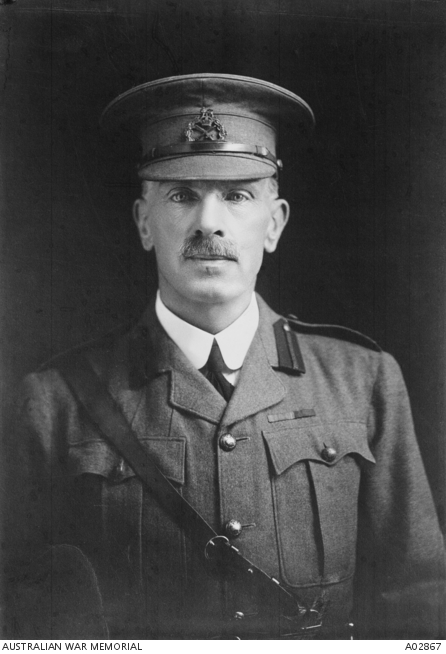
#### Early Military Career
- **Commissioning**: Bridges was commissioned into the Royal Artillery in 1879. However, he returned to Australia in 1885 and transferred to the New South Wales Permanent Artillery.
- **Career Progression**: Bridges held various positions, including artillery instructor and staff officer, which showcased his organizational talents and dedication.
#### Contributions to Australian Military
- **Boer War**: During the Second Boer War, Bridges served as a staff officer, earning valuable experience in operations and logistics.
- **Royal Military College, Duntroon**: In 1910, he was appointed as the first commandant of the newly established Royal Military College at Duntroon in Canberra, which aimed to train officers for the Australian Army.
#### World War I
- **Formation of the AIF**: At the outbreak of World War I in 1914, Bridges was given the task of raising and commanding the 1st Australian Division as part of the Australian Imperial Force (AIF).
- **Gallipoli Campaign**: Bridges led his division in the Gallipoli Campaign, one of the most significant and grueling battles faced by Australian forces during the war. The campaign began in April 1915, with the aim of capturing the Dardanelles and providing a sea route to Russia.
#### Death and Legacy
- **Wounding and Death**: On May 15, 1915, during the Gallipoli Campaign, Bridges was severely wounded by a Turkish sniper while inspecting the front lines. Despite immediate medical attention, he succumbed to his injuries on May 18, 1915, aboard a hospital ship.
- **Burial**: Initially buried at sea, Bridges' body was later exhumed and returned to Australia, where he was buried with full military honors at the Royal Military College, Duntroon, the institution he had helped establish.
#### Honors and Recognition
- **Knighthood**: Bridges was posthumously knighted as a Knight Commander of the Order of the Bath (KCB) in recognition of his service and contributions to the Australian military.
- **Legacy**: Major-General Sir William Throsby Bridges is remembered for his crucial role in the formation of the AIF and his leadership during the early stages of World War I. His legacy lives on at the Royal Military College, Duntroon, and in the annals of Australian military history.
#### Personal Life
- **Family**: Bridges married Edith Lilian Francis in 1885, and the couple had seven children. Despite his demanding career, he maintained a close relationship with his family.
### Conclusion
Major-General Sir William Throsby Bridges' career was marked by dedication, strategic insight, and a deep commitment to the development of the Australian military. His leadership during a critical period of World War I and his foundational role at the Royal Military College, Duntroon, have left a lasting impact on Australia's military heritage.


