Thursday, May 11, 2023

EU's new economy plan

 The European Union has recently introduced a new economy plan aimed at transforming the region's economic landscape. The plan focuses on several key areas, including digitalization, sustainability, competitiveness, and social cohesion. The plan aims to strengthen the European economy and make it more resilient to future challenges.


This essay will provide a detailed analysis of the EU's new economy plan. It will examine the plan's objectives, strategies, and expected outcomes. The essay will also discuss the potential challenges and risks associated with the plan's implementation.

Objectives of the EU's New Economy Plan

The EU's new economy plan has several objectives, which can be broadly categorized into three main areas: digitalization, sustainability, and competitiveness.

Digitalization

One of the primary objectives of the EU's new economy plan is to promote digitalization across the region. This includes developing a comprehensive digital strategy that will enable the EU to compete with other regions such as China and the United States.

The plan aims to achieve this objective through several strategies, including investing in digital infrastructure, promoting digital innovation, and improving digital skills. The EU plans to invest in digital infrastructure by expanding high-speed internet and 5G networks across the region. The plan also aims to promote digital innovation by increasing investment in research and development and supporting start-ups and small and medium-sized enterprises (SMEs).

To improve digital skills, the EU plans to provide training and upskilling programs for workers, particularly those in industries that are being disrupted by automation and digitalization. The plan also aims to develop a framework for the ethical and responsible use of emerging technologies such as artificial intelligence (AI) and blockchain.

Sustainability

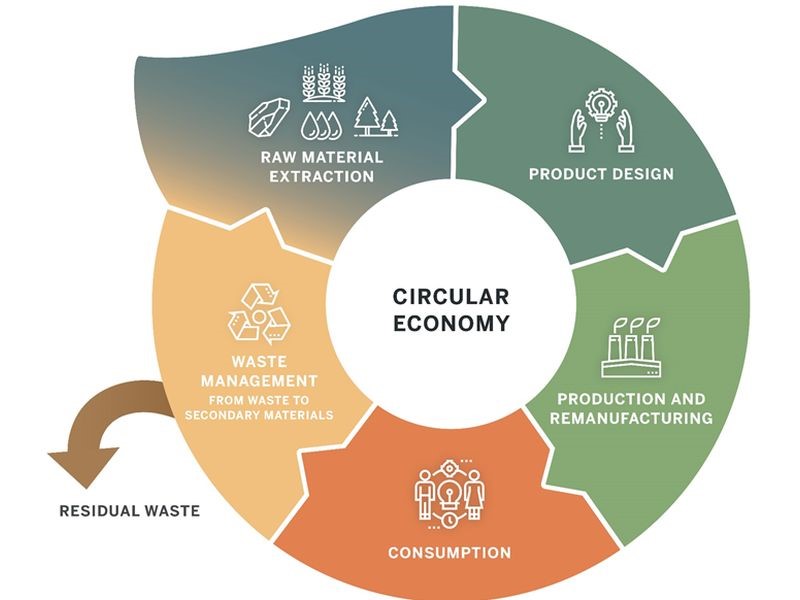
Another key objective of the EU's new economy plan is to promote sustainability across the region. This includes reducing greenhouse gas emissions, improving resource efficiency, and promoting circular economy principles.

To achieve this objective, the EU plans to implement several strategies, including investing in clean energy, promoting sustainable mobility, and supporting circular economy initiatives. The plan aims to invest in clean energy by increasing the use of renewable energy sources such as wind and solar power. The plan also aims to promote sustainable mobility by investing in public transportation and encouraging the use of electric vehicles.

To support circular economy initiatives, the EU plans to develop a comprehensive circular economy action plan that will promote the reuse, repair, and recycling of products and materials. The plan also aims to promote sustainable agriculture and reduce food waste.

Competitiveness

The third objective of the EU's new economy plan is to promote competitiveness across the region. This includes improving the business environment, promoting innovation, and strengthening the EU's industrial base.

To achieve this objective, the EU plans to implement several strategies, including simplifying regulations, reducing administrative burdens, and promoting entrepreneurship. The plan aims to promote innovation by increasing investment in research and development and supporting the development of new technologies.

The plan also aims to strengthen the EU's industrial base by promoting strategic sectors such as the automotive and aerospace industries. The plan aims to support the development of small and medium-sized enterprises (SMEs) by providing access to financing and supporting entrepreneurship.

Strategies of the EU's New Economy Plan

To achieve its objectives, the EU's new economy plan includes several strategies, which are discussed below.

Digitalization

Investing in digital infrastructure: The EU plans to invest in digital infrastructure by expanding high-speed internet and 5G networks across the region. The plan aims to ensure that all EU citizens have access to affordable, high-quality digital services.

Promoting digital innovation: The EU plans to promote digital innovation by increasing investment in research and development and supporting start-ups and SMEs. The plan also aims to create a favorable environment for digital innovation by promoting entrepreneurship and reducing administrative burdens.

Improving digital skills: The EU plans to improve digital skills by providing training and upskilling programs

Monday, May 8, 2023

Some major economic reforms of South Asia


South Asia is a diverse region consisting of eight countries, each with its unique economic history and challenges. Over the past few decades, several significant economic reforms have taken place in South Asia to boost economic growth, attract foreign investment, and reduce poverty. Here are some major economic reforms of South Asia:


  1. Economic liberalization: In the 1980s and 1990s, most South Asian countries embarked on economic liberalization programs. This involved reducing trade barriers, privatizing state-owned enterprises, and deregulating markets. India, for example, implemented a series of economic reforms in 1991 that led to increased foreign investment, higher economic growth, and reduced poverty.

  2. Microfinance: Microfinance has played a significant role in reducing poverty and empowering women in South Asia. Microfinance institutions provide small loans to poor individuals who do not have access to traditional banking services. The Grameen Bank in Bangladesh is one of the most well-known microfinance institutions in the world.

  3. Infrastructure development: South Asian countries have made significant investments in infrastructure development, including transportation, energy, and telecommunications. For example, India has invested heavily in its road network, and now has one of the largest road networks in the world. Pakistan has invested in the construction of the China-Pakistan Economic Corridor (CPEC), which will connect China's western province of Xinjiang to Pakistan's Gwadar port.

  4. Tax reforms: Several South Asian countries have implemented tax reforms to increase revenue collection and reduce tax evasion. Sri Lanka, for example, introduced a value-added tax (VAT) in 2002, which has helped to increase revenue collection and reduce reliance on direct taxes.

  5. Foreign investment: South Asian countries have increasingly opened up to foreign investment in recent years. This has led to the establishment of several special economic zones (SEZs) to attract foreign investors. India's SEZs have been particularly successful, with several multinational corporations setting up operations in these zones.

Overall, South Asia has made significant progress in implementing economic reforms over the past few decades. However, there is still a long way to go, particularly in reducing poverty and improving living standards for all citizens.

Monday, May 1, 2023

Economy of North Korea

 North Korea is a highly secretive and isolated country, and as such, reliable information about its economy and budget is difficult to come by. The country's economy is centrally planned and heavily controlled by the government, which owns and operates most of the major industries. North Korea is heavily reliant on foreign aid, particularly from China, and has struggled with economic sanctions imposed by the United States and other countries.


In 2020, North Korea reportedly had a budget of around $5.5 billion, with the majority of this funding allocated to military spending. The country's military is a top priority for the government, and it has invested heavily in developing nuclear weapons and ballistic missiles. Other government priorities include maintaining control over the population and supporting the ruling elite.

North Korea's economy is highly dependent on its natural resources, including coal, iron ore, and minerals. The country also exports textiles, seafood, and other products to earn foreign currency. However, the economy is highly centralized, and most economic activity is controlled by the government. Private enterprise is limited, and foreign investment is heavily restricted.

Overall, the North Korean budget is highly secretive and difficult to assess with any degree of accuracy. The country's economy is heavily controlled by the government, and it has struggled with international sanctions and a lack of foreign investment.

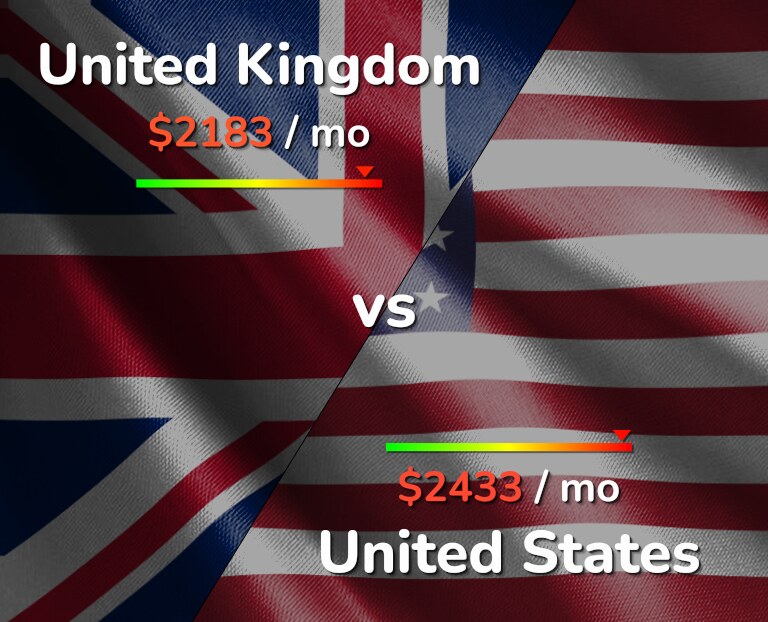
United Kingdom vs United States Economy Stats Compared

 The United States is the world's largest economy and the federal government's budget for the 2021 fiscal year was $4.8 trillion. In contrast, the United Kingdom's economy is much smaller and its budget for the same period was £909 billion (approximately $1.2 trillion USD). However, the UK's population is only about 20% of the US population, so on a per capita basis, the UK's budget is actually larger than the US budget.


The US budget is divided into three main categories: mandatory spending, discretionary spending, and interest on the national debt. Mandatory spending includes programs like Social Security, Medicare, and Medicaid, which are required by law to be funded at specific levels. Discretionary spending includes programs like defense, education, and infrastructure, and can be adjusted each year by Congress. Interest on the national debt is the amount of money the government pays to service its outstanding debt.

In the US, mandatory spending accounts for the largest portion of the federal budget, at about 60% of total spending. This is due to the large and growing costs of programs like Social Security and Medicare, which support the country's aging population. Defense spending is the next largest category, at about 15% of total spending, followed by discretionary spending on programs like education, infrastructure, and environmental protection.

In contrast, the UK's budget is divided into five main categories: health, social protection, education, public order and safety, and other areas. Health is the largest category, accounting for about 20% of total spending, followed by social protection, which includes programs like unemployment benefits and pensions. Education accounts for about 10% of total spending, while public order and safety, which includes spending on police and the justice system, accounts for about 6%.

In terms of taxation, the US generally has lower tax rates than the UK, but a more complex tax code with more deductions and exemptions. The UK generally has higher tax rates but a simpler tax code. In the US, the federal government collects income taxes, payroll taxes, and excise taxes, among others. In the UK, income tax, national insurance contributions, and value-added tax (VAT) are the main sources of revenue.

Overall, while the budgets of the US and UK have some similarities in terms of their priorities and allocations, they are also significantly different due to the countries' differing populations, economies, and political structures. The US budget is dominated by mandatory spending on entitlement programs like Social Security and Medicare, while the UK budget focuses more on healthcare and social protection. The US also generally has lower tax rates than the UK, but a more complex tax code.

Sunday, April 30, 2023

MI6


M
I6, or the Secret Intelligence Service (SIS), was established in 1909 and is the oldest of the British intelligence agencies. Its main responsibility is to provide the British government with intelligence on global issues that may affect national security, particularly those related to foreign countries and international organizations.

MI6 collects intelligence from a range of sources, including human intelligence (HUMINT), signals intelligence (SIGINT), and imagery intelligence (IMINT). HUMINT involves the collection of information from human sources, such as agents or informants, while SIGINT involves the interception and analysis of electronic communications. IMINT involves the collection and analysis of imagery, such as satellite or aerial photographs.

In addition to collecting intelligence, MI6 is also responsible for conducting covert operations abroad to protect the interests of the UK and its allies. These operations can include a range of activities, such as sabotage, espionage, and targeted killings. MI6 works closely with other British intelligence agencies, as well as with foreign intelligence services, to share information and coordinate operations.

MI6 operates under strict confidentiality and secrecy rules, and its activities are not publicly disclosed. The agency's headquarters are located in London, and it reports to the Foreign Secretary. MI6 is overseen by a committee of senior government officials, known as the Joint Intelligence Committee, which is responsible for ensuring that the agency's activities are legal and in the national interest.

Overall, MI6 plays a critical role in protecting the national security of the UK and its allies, and its work is essential to maintaining global stability and security.

mi6,mi6 secrets,cia,cia declassified,declassified,history,british mi6,mi6 secret intelligence service,what is mi6,history documentary,cia secrets,cia operations,secret intelligence service,cia vs mi6,what is cia,cia money,central intelligence agency,espionage,spy,james bond,secret,spies,intelligence,spying,security service,united states,secret service,agent,bond,infographic

Throughout history, many countries have ceased to exist, either through political changes, mergers, or even dissolution.


  1. Yugoslavia: This country existed from 1918 until its dissolution in 1992, which resulted in the formation of six independent countries: Bosnia and Herzegovina, Croatia, Macedonia, Montenegro, Serbia, and Slovenia.

  2. Soviet Union: The Soviet Union was formed in 1922 and dissolved in 1991. It was a federal socialist state that spanned 15 republics, and its dissolution resulted in the formation of several independent countries in Eastern Europe and Central Asia.

  3. East Germany: East Germany was created in 1949 and was dissolved in 1990 when it reunited with West Germany after the fall of the Berlin Wall.

  4. Czechoslovakia: Czechoslovakia was formed in 1918 after World War I and existed until 1993 when it split into two independent countries, the Czech Republic and Slovakia.

  5. Tibet: Tibet was a sovereign state until it was invaded and occupied by China in 1950. Tibet continues to exist as a distinct cultural region, but it is not recognized as an independent country by China or many other countries.


These are just a few examples of countries that no longer exist, but there are many more throughout history.

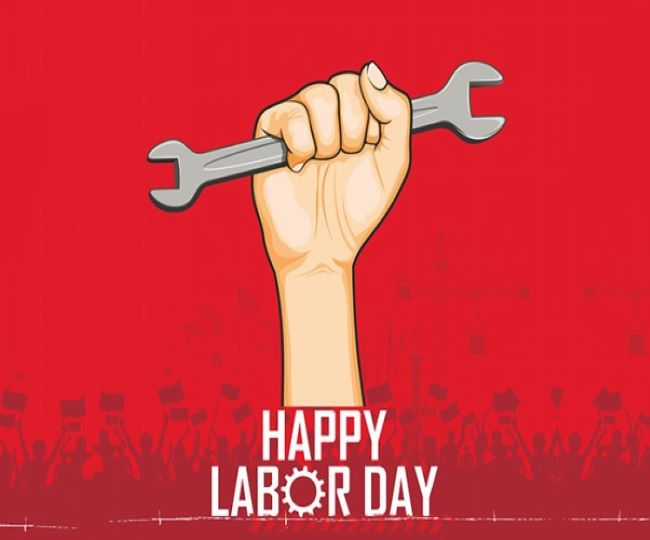
May Day

 May Day, also known as International Workers’ Day, is celebrated on May 1st every year in many countries around the world. It is a day that commemorates the historic struggles of the working class, and it has a rich and complex history that stretches back more than a century.


The origins of May Day can be traced back to the late 19th century, when the labor movement was gaining strength in many parts of the world. At that time, workers were facing harsh working conditions, low wages, and long hours, and they began to organize themselves into unions to demand better treatment.

One of the most important early events in the history of May Day took place in Chicago in 1886. On May 1st of that year, workers across the city went on strike to demand an eight-hour workday. The strike was part of a broader movement that had been building for years, and it was met with a brutal response from the police and the government.

On May 3rd, police fired into a crowd of striking workers at the McCormick Harvesting Machine Company, killing several people. In response, a rally was called for the following day at Haymarket Square, and thousands of workers turned out to demand justice.

The rally was peaceful for the most part, but as it was winding down, a bomb was thrown into the crowd, killing several police officers and injuring many others. The incident became known as the Haymarket Massacre, and it had a profound impact on the labor movement around the world.

In the aftermath of the Haymarket Massacre, eight labor activists were arrested and charged with conspiracy to commit murder. Despite a lack of evidence linking them to the bombing, all eight were convicted and sentenced to death.

The case became a cause célèbre for the labor movement, and May 1st was designated as a day to honor the memory of the Haymarket martyrs. In 1889, the International Socialist Congress declared May 1st as International Workers’ Day, and it has been celebrated as such ever since.

May Day quickly became a major holiday for the labor movement around the world, and it was celebrated with parades, rallies, and speeches in many countries. In the Soviet Union, May Day was a major event, with huge parades and displays of military might.

During World War II, May Day became a symbol of resistance against fascism, and it was celebrated by anti-Nazi forces across Europe. After the war, May Day continued to be an important day for the labor movement, but it also took on new meanings in different parts of the world.

In some countries, May Day became a day to celebrate spring and the renewal of life. In others, it became a day to celebrate the achievements of socialism and communism. In still others, it became a day to protest against capitalism and imperialism.

In the United States, May Day never became a major holiday, and it was largely forgotten by the mainstream labor movement after the 1920s. However, it continued to be celebrated by radical groups and immigrant communities, and it experienced a resurgence in the 1970s as a day of protest against the Vietnam War and other social injustices.

Today, May Day is celebrated in many different ways around the world. In some countries, it is a national holiday with parades and festivals. In others, it is a day of protest and resistance against oppressive governments and economic systems.

Despite its long and complex history, May Day remains a powerful symbol of the struggle for workers’ rights and social justice. It reminds us of the sacrifices that have been made by those who came before us, and it inspires us to continue the fight for a more just and equitable world.

Vanuatu: An Academic Description

  Part 1: General Overview and Physical Geography 1. Introduction Vanuatu is an island nation located in the South Pacific Ocean, forming ...