Sunday, April 30, 2023

MI6


M
I6, or the Secret Intelligence Service (SIS), was established in 1909 and is the oldest of the British intelligence agencies. Its main responsibility is to provide the British government with intelligence on global issues that may affect national security, particularly those related to foreign countries and international organizations.

MI6 collects intelligence from a range of sources, including human intelligence (HUMINT), signals intelligence (SIGINT), and imagery intelligence (IMINT). HUMINT involves the collection of information from human sources, such as agents or informants, while SIGINT involves the interception and analysis of electronic communications. IMINT involves the collection and analysis of imagery, such as satellite or aerial photographs.

In addition to collecting intelligence, MI6 is also responsible for conducting covert operations abroad to protect the interests of the UK and its allies. These operations can include a range of activities, such as sabotage, espionage, and targeted killings. MI6 works closely with other British intelligence agencies, as well as with foreign intelligence services, to share information and coordinate operations.

MI6 operates under strict confidentiality and secrecy rules, and its activities are not publicly disclosed. The agency's headquarters are located in London, and it reports to the Foreign Secretary. MI6 is overseen by a committee of senior government officials, known as the Joint Intelligence Committee, which is responsible for ensuring that the agency's activities are legal and in the national interest.

Overall, MI6 plays a critical role in protecting the national security of the UK and its allies, and its work is essential to maintaining global stability and security.

mi6,mi6 secrets,cia,cia declassified,declassified,history,british mi6,mi6 secret intelligence service,what is mi6,history documentary,cia secrets,cia operations,secret intelligence service,cia vs mi6,what is cia,cia money,central intelligence agency,espionage,spy,james bond,secret,spies,intelligence,spying,security service,united states,secret service,agent,bond,infographic

Throughout history, many countries have ceased to exist, either through political changes, mergers, or even dissolution.


  1. Yugoslavia: This country existed from 1918 until its dissolution in 1992, which resulted in the formation of six independent countries: Bosnia and Herzegovina, Croatia, Macedonia, Montenegro, Serbia, and Slovenia.

  2. Soviet Union: The Soviet Union was formed in 1922 and dissolved in 1991. It was a federal socialist state that spanned 15 republics, and its dissolution resulted in the formation of several independent countries in Eastern Europe and Central Asia.

  3. East Germany: East Germany was created in 1949 and was dissolved in 1990 when it reunited with West Germany after the fall of the Berlin Wall.

  4. Czechoslovakia: Czechoslovakia was formed in 1918 after World War I and existed until 1993 when it split into two independent countries, the Czech Republic and Slovakia.

  5. Tibet: Tibet was a sovereign state until it was invaded and occupied by China in 1950. Tibet continues to exist as a distinct cultural region, but it is not recognized as an independent country by China or many other countries.


These are just a few examples of countries that no longer exist, but there are many more throughout history.

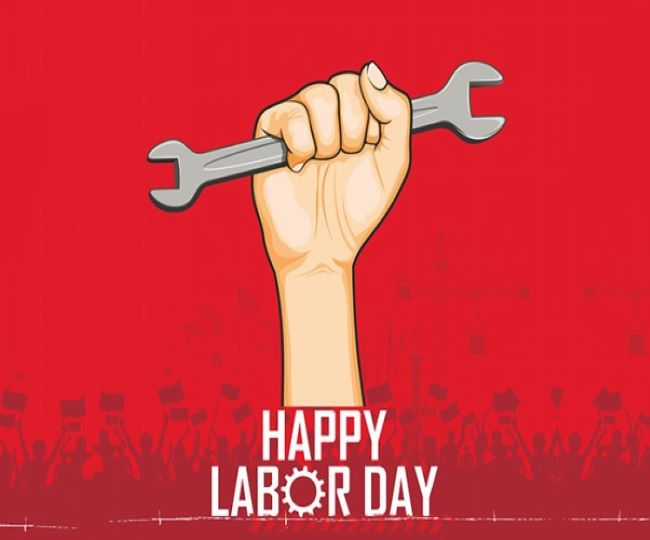
May Day

 May Day, also known as International Workers’ Day, is celebrated on May 1st every year in many countries around the world. It is a day that commemorates the historic struggles of the working class, and it has a rich and complex history that stretches back more than a century.


The origins of May Day can be traced back to the late 19th century, when the labor movement was gaining strength in many parts of the world. At that time, workers were facing harsh working conditions, low wages, and long hours, and they began to organize themselves into unions to demand better treatment.

One of the most important early events in the history of May Day took place in Chicago in 1886. On May 1st of that year, workers across the city went on strike to demand an eight-hour workday. The strike was part of a broader movement that had been building for years, and it was met with a brutal response from the police and the government.

On May 3rd, police fired into a crowd of striking workers at the McCormick Harvesting Machine Company, killing several people. In response, a rally was called for the following day at Haymarket Square, and thousands of workers turned out to demand justice.

The rally was peaceful for the most part, but as it was winding down, a bomb was thrown into the crowd, killing several police officers and injuring many others. The incident became known as the Haymarket Massacre, and it had a profound impact on the labor movement around the world.

In the aftermath of the Haymarket Massacre, eight labor activists were arrested and charged with conspiracy to commit murder. Despite a lack of evidence linking them to the bombing, all eight were convicted and sentenced to death.

The case became a cause célèbre for the labor movement, and May 1st was designated as a day to honor the memory of the Haymarket martyrs. In 1889, the International Socialist Congress declared May 1st as International Workers’ Day, and it has been celebrated as such ever since.

May Day quickly became a major holiday for the labor movement around the world, and it was celebrated with parades, rallies, and speeches in many countries. In the Soviet Union, May Day was a major event, with huge parades and displays of military might.

During World War II, May Day became a symbol of resistance against fascism, and it was celebrated by anti-Nazi forces across Europe. After the war, May Day continued to be an important day for the labor movement, but it also took on new meanings in different parts of the world.

In some countries, May Day became a day to celebrate spring and the renewal of life. In others, it became a day to celebrate the achievements of socialism and communism. In still others, it became a day to protest against capitalism and imperialism.

In the United States, May Day never became a major holiday, and it was largely forgotten by the mainstream labor movement after the 1920s. However, it continued to be celebrated by radical groups and immigrant communities, and it experienced a resurgence in the 1970s as a day of protest against the Vietnam War and other social injustices.

Today, May Day is celebrated in many different ways around the world. In some countries, it is a national holiday with parades and festivals. In others, it is a day of protest and resistance against oppressive governments and economic systems.

Despite its long and complex history, May Day remains a powerful symbol of the struggle for workers’ rights and social justice. It reminds us of the sacrifices that have been made by those who came before us, and it inspires us to continue the fight for a more just and equitable world.

Mars has a thin atmosphere

 Mars has a thin atmosphere composed mainly of carbon dioxide (CO2), with small amounts of nitrogen, argon, and other gases. The atmospheric pressure on Mars is about 1% of Earth's atmospheric pressure at sea level.


The atmosphere of Mars is much colder than Earth's, with an average surface temperature of -80 degrees Fahrenheit (-62 degrees Celsius). The temperature can vary widely depending on the location and time of day, with some areas experiencing temperatures as low as -195 degrees Fahrenheit (-125 degrees Celsius) at night.

Mars has a very thin ozone layer that provides little protection from harmful solar radiation. The atmosphere is also subject to dust storms, which can cover the entire planet for weeks or even months. These storms can affect the temperature and visibility on the planet's surface.

Overall, Mars' atmosphere is inhospitable to human life as we know it, and any human exploration of the planet would require protective equipment and habitats. However, the thin atmosphere and lack of a strong magnetic field also make Mars an interesting target for scientific study, as it provides a unique laboratory for understanding the evolution of planetary atmospheres.

George Washington (1789-1797)

 George Washington was born on February 22, 1732, in Westmoreland County, Virginia, to Augustine and Mary Ball Washington. He was the eldest of six children in the family. His father died when he was just 11 years old, and his half-brother Lawrence, who served as a mentor to him, died when George was only 20. These events forced him to grow up quickly and take on greater responsibilities.


Washington began his career as a surveyor in Virginia, and at the age of 22, he was appointed a major in the Virginia militia. During the French and Indian War, he served as an aide to General Edward Braddock and quickly gained a reputation for bravery and leadership. In 1759, he resigned from the military and returned to his plantation at Mount Vernon.

In 1774, Washington was elected as a delegate to the First Continental Congress, and the following year, he was appointed as commander-in-chief of the Continental Army. Despite facing numerous challenges, including a lack of funding and resources, Washington was able to lead the Continental Army to victory in the Revolutionary War.

After the war, Washington retired from public life, but he was persuaded to attend the Constitutional Convention in 1787, where he was unanimously elected as the convention's president. In 1789, he was elected as the first President of the United States, a position he held for two terms.

During his presidency, Washington established many of the traditions and protocols that still govern the presidency today. He worked to create a strong federal government and played a key role in the drafting of the Constitution. He also established the precedent of a peaceful transfer of power by stepping down from the presidency after two terms.

Washington retired to Mount Vernon in 1797 and died there on December 14, 1799. He is widely regarded as one of America's greatest leaders and is often referred to as the "Father of His Country."


Friday, April 28, 2023

Zero: Even or Odd?

 The number zero, despite being a simple concept, can sometimes cause confusion when it comes to whether it is considered an even or odd number. In this essay, we will explore the different arguments for and against zero being considered even or odd, and examine some historical and mathematical perspectives on the topic.


To begin with, let us define what we mean by an even or odd number. An even number is any integer that can be divided by 2 without leaving a remainder, while an odd number is any integer that cannot be divided by 2 without leaving a remainder. For example, the number 4 is even, since 4 ÷ 2 = 2 with no remainder, while the number 5 is odd, since 5 ÷ 2 = 2 with a remainder of 1.

Now, where does zero fit into this system of even and odd numbers? One argument for zero being considered even is that it follows the same pattern as other even numbers. If we take any even number, add or subtract another even number, the result will always be even. For example, 4 + 2 = 6, and 4 - 2 = 2, both of which are even numbers. Similarly, if we take any odd number, add or subtract another odd number, the result will always be even. For example, 5 + 3 = 8, and 5 - 3 = 2, both of which are even numbers. However, if we take any even number, add or subtract an odd number, the result will always be odd. For example, 4 + 3 = 7, and 4 - 3 = 1, both of which are odd numbers.

Using this pattern, we can argue that zero is even because it follows the same rule as other even numbers. If we take any even number and add or subtract zero, the result will always be the same even number. For example, 4 + 0 = 4, and 4 - 0 = 4, both of which are even numbers. Conversely, if we take any odd number and add or subtract zero, the result will always be the same odd number. For example, 5 + 0 = 5, and 5 - 0 = 5, both of which are odd numbers.

Another argument for zero being considered even is based on the concept of parity. In mathematics, parity refers to whether a number is even or odd. Parity is an important concept in many areas of mathematics, including number theory and abstract algebra. In the context of parity, zero is often considered to be an even number because it has the same parity as other even numbers. That is, zero and all other even numbers can be expressed as 2n, where n is some integer. For example, 0 = 2 × 0, 2 = 2 × 1, 4 = 2 × 2, and so on.

On the other hand, there are some arguments against zero being considered even. One such argument is that zero is not a positive number, which is the usual domain of even and odd numbers. In other words, even and odd are properties of positive integers, whereas zero is neither positive nor negative. Therefore, it may not be appropriate to assign it a property of even or odd.

Additionally, there are some historical and cultural factors that have influenced the way zero is viewed in different contexts. For example, in ancient Indian mathematics, zero was considered neither even nor odd, but rather a unique number with its own properties. In some other cultures, zero was not even considered a number at all, but rather a placeholder or symbol for nothingness.

In conclusion, while there are valid arguments on both sides of

Thursday, April 27, 2023

Codex Gigas

 Codex Gigas is a medieval manuscript, also known as the Devil's Bible, due to its large size and the legend surrounding its creation. It is considered one of the most important medieval manuscripts in the world, containing a unique combination of texts, including the Bible, historical and medical works, and magical incantations. The Codex Gigas is also known for its impressive size, measuring 92 cm high, 50 cm wide, and 22 cm thick. In this report, we will examine the history, content, and cultural significance of the Codex Gigas.


History:

The Codex Gigas was created in the early 13th century, in a Benedictine monastery in Bohemia, which is now modern-day Czech Republic. The manuscript was created over the course of several decades by a team of scribes and artists, under the supervision of a single master scribe. The identity of the master scribe is unknown, but he is believed to have been a skilled calligrapher, able to write at a remarkable speed.

The legend surrounding the creation of the Codex Gigas is that it was created by a monk who had broken his vows and was condemned to be walled up alive. In order to avoid this punishment, the monk promised to create a book containing all human knowledge in a single night. The monk is said to have made a deal with the devil, who helped him complete the task in exchange for the monk's soul. This legend is supported by the inclusion of a portrait of the devil in the manuscript, which is one of the most famous images in the Codex Gigas.

The manuscript was later acquired by the Cistercian monastery in Sedlec, where it remained until the Thirty Years' War. During this time, it was taken by Swedish troops as a spoil of war and brought to Sweden, where it was kept in the Royal Library in Stockholm. The Codex Gigas was later returned to the Czech Republic in 1648, as part of the Treaty of Westphalia, which ended the Thirty Years' War.

Content:

The Codex Gigas contains a wide range of texts, including the complete Old and New Testaments of the Christian Bible, as well as other religious and historical works. The manuscript also contains a number of medical texts, including a guide to women's health and a description of medicinal plants. Additionally, the Codex Gigas includes several magical incantations, such as a spell to summon a demon.

One of the most remarkable features of the Codex Gigas is the size and quality of its illustrations. The manuscript contains over 600 pages, with each page measuring approximately 92 cm high by 50 cm wide. Many of the illustrations are full-page, and the quality of the artistry is of a very high standard. In addition to the portrait of the devil, the manuscript includes depictions of Christ, the Virgin Mary, and various saints and apostles.

Cultural Significance:

The Codex Gigas is a unique cultural artifact, representing the pinnacle of medieval book production. Its size and quality make it a testament to the skill and dedication of the scribes and artists who created it. The manuscript is also an important historical document, providing a window into the beliefs and practices of medieval Europe. The inclusion of medical and magical texts, in addition to religious works, shows the broad range of knowledge and interests of the people who created and used the manuscript.

The legend surrounding the creation of the Codex Gigas also adds to its cultural significance. The story of the monk who made a deal with the devil has captured the popular imagination for centuries, and the image of the devil in the manuscript has become an iconic symbol of the work.

Conclusion:

The Codex Gigas is a remarkable manuscript, both

Harry Potter

 The Dark Lord Ascending T he two men appeared out of nowhere, a few yards apart in the narrow, moonlit lane. For a second they stood quite ...