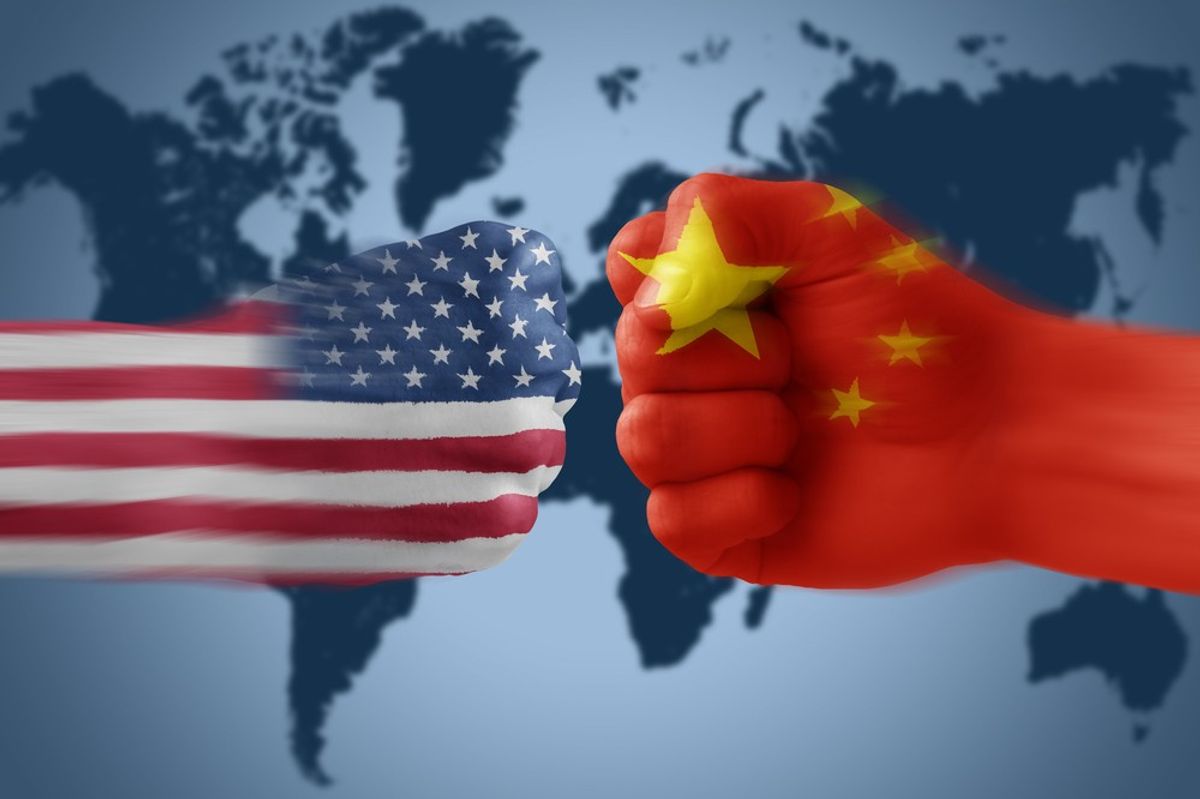
The military capabilities of the United States and China differ significantly in technology, scale, experience, and strategic focus. Here’s a breakdown comparing key areas of military power:
1. Military Budget
- United States: The U.S. has the world’s largest military budget, with defense spending around $800 billion annually. This budget supports global bases, advanced technology, and large-scale R&D.
- China: China’s military budget is the second largest, at approximately $230 billion. While lower than the U.S., it has increased significantly over recent decades, focusing primarily on regional dominance and technological improvements.
2. Active Personnel
- United States: The U.S. has around 1.4 million active personnel and a strong reserve component. The U.S. military is smaller in size but heavily trained and highly mobile, with significant global presence.
- China: China has the world’s largest standing military, with around 2 million active personnel. China has focused on modernizing and professionalizing its forces, though its personnel are primarily concentrated within or near China.
3. Navy Power
- United States: The U.S. Navy has around 11 aircraft carriers and over 80 destroyers, with highly advanced submarines, including nuclear-powered vessels. The U.S. Navy is also very experienced in long-distance, overseas operations, with major fleets stationed globally.
- China: China has the largest number of ships by count, focusing on the South China Sea and regional waters. It has two aircraft carriers (and a third in development) and rapidly developing submarine capabilities, though its carriers are less technologically advanced than the U.S.'s nuclear-powered ones.
4. Air Force Power
- United States: The U.S. has around 13,000 military aircraft, including advanced fighter jets like the F-35 and F-22, along with a large fleet of bombers, drones, and advanced radar systems. The U.S. Air Force and Navy’s air component are globally dominant in terms of both quality and experience.
- China: China has roughly 3,000 military aircraft, including the J-20 stealth fighter and other indigenous designs. While China’s air force is improving rapidly, particularly with a focus on stealth and drone technology, it is generally viewed as less technologically advanced than the U.S.'s air capabilities.
5. Nuclear Arsenal
- United States: The U.S. has an estimated 3,700 nuclear warheads, with a sophisticated delivery triad that includes intercontinental ballistic missiles (ICBMs), submarine-launched ballistic missiles (SLBMs), and strategic bombers. This capability serves as a strong deterrent.
- China: China has around 400 nuclear warheads and a “no-first-use” policy. Its delivery systems include ICBMs, SLBMs, and aircraft, though it lacks the same extensive nuclear triad as the U.S. China has been gradually expanding and modernizing its nuclear stockpile.
6. Cyber Warfare and Space Capabilities
- United States: The U.S. has invested significantly in both offensive and defensive cyber capabilities and space infrastructure, including a dedicated Space Force. The U.S. is highly advanced in satellite technology, space-based defense, and cyber warfare.
- China: China also invests heavily in cyber warfare and space, with an emphasis on anti-satellite (ASAT) weapons and satellite networks. China’s space program has rapidly advanced, with its own global navigation system (BeiDou) and plans to expand its space station.
7. Experience and Global Reach
- United States: The U.S. military has decades of experience in combat operations and power projection globally, with bases in over 70 countries. This gives the U.S. unique strategic reach and logistical capacity to operate anywhere.
- China: China’s military experience is mostly regional, focusing on East Asia and territorial disputes. Its overseas reach is limited, with only a few overseas military bases, although it has been increasing operations in the Indian Ocean and Africa.
8. Technology and Innovation
- United States: The U.S. leads in cutting-edge technologies such as stealth, precision weaponry, artificial intelligence, and advanced radar. U.S. R&D is extensive, fostering continuous innovation in military tech.
- China: China is rapidly closing the technology gap, particularly in areas like AI, hypersonics, and cyber. However, it is still generally behind the U.S. in high-end military tech, though it continues to narrow this gap.
Summary
- Strengths of the U.S. Military: Advanced technology, extensive global reach, highly trained personnel, and nuclear deterrence capabilities.
- Strengths of the Chinese Military: Large numbers, regional strength, growing technological capabilities, and significant investment in cyber and space defense.
While China has a strong regional presence and rapidly advancing technology, the U.S. maintains a qualitative and experiential edge, particularly in global force projection, technology, and nuclear deterrence. China’s strategy focuses on regional dominance and deterrence, while the U.S. leverages global reach and advanced capabilities.