Monday, February 26, 2024

Gandhara Valley


The Gandhara Valley, situated at the confluence of the Kabul and Swat rivers in present-day Pakistan and Afghanistan, holds immense significance in the realms of art, culture, and history. It served as a crucible of civilization and a melting pot of diverse cultures, witnessing the convergence of Indian, Persian, Greek, and Central Asian influences. This region flourished as a vibrant center of Buddhist art and learning, leaving behind a rich legacy that continues to captivate scholars and enthusiasts alike.
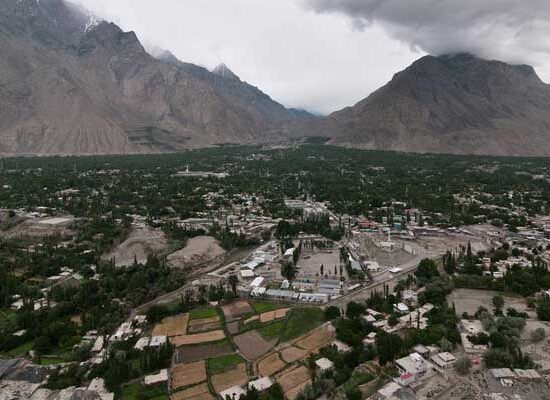


The history of Gandhara can be traced back to ancient times, with evidence of human habitation dating as far back as the Neolithic period. However, it was during the Gandhara period, roughly spanning from the 4th century BCE to the 5th century CE, that the region truly flourished as a cultural and artistic hub. The term "Gandhara" is believed to have originated from the Sanskrit word "gandhāra," which refers to the fragrant resin of the sal tree, abundant in the region.

One of the defining features of Gandhara was its strategic location along the ancient Silk Road, the network of trade routes connecting the East and West. This facilitated the exchange of goods, ideas, and cultures between civilizations spanning from China to the Mediterranean. As a result, Gandhara became a melting pot of diverse influences, with Greek, Persian, Indian, and Central Asian elements blending seamlessly to create a unique cultural tapestry.

The advent of Buddhism played a pivotal role in shaping the cultural landscape of Gandhara. It is believed that Buddhism was introduced to the region during the reign of Emperor Ashoka in the 3rd century BCE. Gandhara soon emerged as a major center of Buddhist learning and pilgrimage, attracting scholars, monks, and devotees from far and wide. Monastic establishments such as Takht-i-Bahi and Butkara Stupa served as centers of learning and spiritual practice, fostering the growth of Buddhist art and philosophy.

The artistic legacy of Gandhara is perhaps best exemplified by its iconic Gandharan art, characterized by a unique blend of Hellenistic and Indian styles. This distinctive artistic tradition emerged as a result of the cultural exchange between the Greek settlers of Alexander the Great's army and the indigenous Indian population. Gandharan art is renowned for its exquisite sculptures, particularly those depicting the life of the Buddha and Buddhist deities.

The Gandharan sculptures are characterized by their realism and attention to detail, reflecting the influence of Greek sculptural techniques. The Buddha statues, in particular, exhibit a sense of serenity and grace, with finely carved features and flowing robes. These sculptures served not only as objects of devotion but also as expressions of the profound spiritual ideals espoused by Buddhism.

One of the most iconic examples of Gandharan art is the Buddha of Gandhara, a monumental statue believed to date back to the 2nd century CE. Carved from gray schist stone, the statue depicts the Buddha in a seated posture, with his hand raised in a gesture of teaching known as the dharmachakra mudra. The serene expression and graceful demeanor of the Buddha embody the essence of Gandharan artistic sensibility.

In addition to sculptures, Gandharan art also encompassed other forms of artistic expression, including relief carvings, architectural ornamentation, and decorative objects. The motifs and iconography employed in Gandharan art were deeply rooted in Buddhist symbolism, reflecting the spiritual beliefs and practices of the time. Lotus flowers, stupas, and scenes from the life of the Buddha were commonly depicted, serving as visual reminders of the path to enlightenment.

The decline of Gandhara as a cultural and artistic center began around the 5th century CE, with the advent of Islamic rule in the region. The spread of Islam led to the gradual decline of Buddhism and the erosion of Gandhara's Buddhist heritage. Many of the monastic establishments and Buddhist sites fell into disrepair, and the once-thriving artistic tradition entered a period of decline.

Despite its decline, the legacy of Gandhara continues to resonate in the modern world. The Gandharan art and artifacts unearthed from archaeological sites have found their way into museums and private collections around the globe, serving as a testament to the region's cultural richness and artistic ingenuity. Scholars continue to study and interpret Gandharan art, shedding new light on its significance and influence on subsequent artistic traditions.

In conclusion, the Gandhara Valley stands as a testament to the enduring power of cultural exchange and artistic innovation. From its origins as a melting pot of diverse influences to its flourishing as a center of Buddhist art and learning, Gandhara has left an indelible mark on the cultural landscape of South Asia and beyond. Its legacy continues to inspire awe and admiration, reminding us of the transformative power of art and the enduring quest for spiritual enlightenment.


Friday, February 23, 2024

Top 5 KGB operations


  1. Operation Trust (1921-1926): This operation was aimed at infiltrating and neutralizing anti-Bolshevik movements by creating a fake anti-Soviet organization to deceive and identify counter-revolutionaries.

  2. Operation Barbarossa (1941): While not solely a KGB operation, Soviet intelligence, including the NKVD (the predecessor of the KGB), provided Stalin with warnings of the impending German invasion. Although Stalin initially disregarded these warnings, the information gathered by Soviet intelligence was crucial for the Soviet defense once the invasion began.

  3. The Cambridge Five (1940s-1950s): This was a successful KGB operation involving the recruitment of five British agents (Kim Philby, Donald Maclean, Guy Burgess, Anthony Blunt, and John Cairncross) who penetrated British intelligence and provided valuable information to the Soviets during the Cold War.

  4. Operation RYAN (1981-1983): This operation involved intensive KGB efforts to collect intelligence on a potential NATO surprise attack on the Soviet Union. It led to heightened tensions between the superpowers but also provided valuable insight into NATO's intentions.

  5. Operation INFEKTION (1980s): This disinformation campaign aimed to spread the idea that the United States had created the HIV/AIDS virus as a biological weapon. While not solely a KGB operation, Soviet intelligence played a significant role in promoting this conspiracy theory, which sowed confusion and mistrust in Western countries.

The Rwanda Genocide

 The Rwanda Genocide, one of the most devastating events in recent history, occurred in 1994 in the African nation of Rwanda. It was a systematic campaign of mass slaughter primarily targeting the Tutsi ethnic group, as well as moderate Hutus and others who opposed the extremist Hutu regime in power at the time.


The roots of the genocide can be traced back to Rwanda's colonial history. During Belgian colonial rule, ethnic distinctions between the Tutsis and Hutus were emphasized, with Tutsis often favored for administrative roles, creating social and economic disparities. Despite these divisions, Rwanda had a shared history of cultural and linguistic ties between the two groups.


After Rwanda gained independence in 1962, political tensions escalated, culminating in outbreaks of violence between the Hutu majority and Tutsi minority. Discrimination against Tutsis continued, and many fled the country, contributing to a cycle of conflict and instability.


In April 1994, the assassination of Rwandan President Juvenal Habyarimana, a Hutu, triggered the genocide. Extremist Hutu factions within the government and military launched a coordinated campaign to exterminate the Tutsi population, using propaganda, hate speech, and radio broadcasts to incite Hutu civilians to participate in the killings.


Over the course of approximately 100 days, an estimated 800,000 to 1 million people, predominantly Tutsis, were brutally murdered. Machetes, clubs, and other crude weapons were used to carry out the killings, often in public places and even within churches and schools where victims sought refuge.


During the genocide, the international community largely failed to intervene effectively to stop the violence, despite mounting evidence of atrocities. The United Nations peacekeeping mission in Rwanda, UNAMIR, was ill-equipped and lacked a clear mandate to protect civilians.


The genocide came to an end in July 1994 when the Rwandan Patriotic Front (RPF), a Tutsi-led rebel group, captured the capital city of Kigali and halted the genocide. The RPF's victory led to the establishment of a new government under President Paul Kagame, a Tutsi.


In the aftermath of the genocide, Rwanda faced immense challenges, including widespread trauma, displacement, and a shattered social fabric. Efforts towards justice and reconciliation have been ongoing, including the establishment of the International Criminal Tribunal for Rwanda (ICTR) to prosecute those responsible for genocide and other atrocities.


Rwanda has made significant strides in rebuilding and development in the years since the genocide, with efforts focused on promoting unity, reconciliation, and economic growth. However, the legacy of the genocide continues to shape Rwandan society and international responses to mass atrocities, serving as a stark reminder of the consequences of ethnic hatred and the importance of preventing such atrocities in the future.

Thursday, February 22, 2024

The Rule of 72

 The Rule of 72 is a simple mathematical shortcut used to estimate the time it takes for an investment to double in value, given a fixed annual rate of return. It's a handy tool for quick mental calculations in finance and investment planning.

Here's how it works:

Divide 72 by the annual rate of return (expressed as a percentage) to get an estimate of the number of years it will take for an investment to double.

Mathematically, the formula can be represented as:

Years to Double=72Annual Rate of Return

For example, if you have an investment with an annual rate of return of 8%, you can estimate that it will take approximately 728=9 years for the investment to double in value.

Similarly, if the annual rate of return is 10%, it would take approximately 7210=7.2 years for the investment to double.

The Rule of 72 provides a quick approximation and works well for interest rates between 6% and 10%. However, it becomes less accurate for significantly higher or lower interest rates. For more precise calculations, especially with variable rates or compounding, it's better to use more sophisticated financial formulas or calculators.

Harry Potter

 The Dark Lord Ascending T he two men appeared out of nowhere, a few yards apart in the narrow, moonlit lane. For a second they stood quite ...