Friday, May 12, 2023

The 2023 Turkish general election

 The 2023 Turkish general election is expected to be one of the most important elections in recent Turkish history. There are many important issues that need to be discussed in order to understand the context and implications of this election. In this essay, we will discuss some of the key issues that are likely to shape the 2023 Turkish general election, including the political climate, the economy, foreign relations, democracy and human rights, and the role of religion in politics.


Political Climate

Turkey has been experiencing a significant political upheaval in recent years, with the ruling Justice and Development Party (AKP) facing mounting criticism from both domestic and international sources. The political climate in Turkey is likely to play a major role in the 2023 general election, as voters will have to choose between the current government and opposition parties that promise to address some of the issues that have caused frustration and dissatisfaction among the Turkish electorate.

One of the key factors shaping the political climate in Turkey is the ongoing conflict between the government and the opposition. The AKP has been accused of authoritarianism, corruption, and limiting freedom of expression. In response, opposition parties have emerged and gained popularity, especially in urban areas. The main opposition parties include the Republican People's Party (CHP), the Peoples' Democratic Party (HDP), and the İYİ Party. In addition, there are several smaller parties that are also running in the upcoming election.

The Economy

The economy is likely to be a key issue in the 2023 Turkish general election. The country has been facing a number of economic challenges in recent years, including high inflation, a weak currency, and a growing trade deficit. These issues have led to a decrease in living standards for many Turkish citizens, and they are likely to play a major role in the upcoming election.

One of the key factors shaping the economy in Turkey is the country's dependence on foreign investment. Turkey is a major trading partner with the European Union, and many European companies have invested in Turkey in recent years. However, the country's economic growth has slowed down in recent years, and there are concerns that this could lead to a decrease in foreign investment.

Foreign Relations

Foreign relations are also likely to be an important issue in the 2023 Turkish general election. Turkey is a key player in the Middle East, and it has important relationships with a number of countries, including the United States, Russia, and Iran. These relationships are likely to be a key factor in the upcoming election, as voters will have to choose between parties that prioritize different foreign policy objectives.

One of the key issues in Turkey's foreign policy is its relationship with the United States. The two countries have had a difficult relationship in recent years, with tensions rising over a number of issues, including Turkey's purchase of the Russian S-400 missile defense system and the ongoing conflict in Syria. The AKP has taken a more confrontational stance towards the United States, while the opposition parties have called for a more conciliatory approach.

Democracy and Human Rights

Democracy and human rights are also likely to be important issues in the 2023 Turkish general election. Turkey has been criticized by international organizations for its treatment of journalists, political dissidents, and minority groups. The country has also faced criticism for its crackdown on civil society organizations and its restrictions on freedom of expression.

The AKP has been accused of eroding democratic institutions in Turkey and limiting freedom of expression. The opposition parties have called for a more democratic and inclusive society, with greater protections for human rights. These issues are likely to be a key factor in the upcoming election, as voters will have to choose between parties that prioritize different approaches to democracy and human rights.

Role of Religion in Politics

Thursday, May 11, 2023

EU's new economy plan

 The European Union has recently introduced a new economy plan aimed at transforming the region's economic landscape. The plan focuses on several key areas, including digitalization, sustainability, competitiveness, and social cohesion. The plan aims to strengthen the European economy and make it more resilient to future challenges.


This essay will provide a detailed analysis of the EU's new economy plan. It will examine the plan's objectives, strategies, and expected outcomes. The essay will also discuss the potential challenges and risks associated with the plan's implementation.

Objectives of the EU's New Economy Plan

The EU's new economy plan has several objectives, which can be broadly categorized into three main areas: digitalization, sustainability, and competitiveness.

Digitalization

One of the primary objectives of the EU's new economy plan is to promote digitalization across the region. This includes developing a comprehensive digital strategy that will enable the EU to compete with other regions such as China and the United States.

The plan aims to achieve this objective through several strategies, including investing in digital infrastructure, promoting digital innovation, and improving digital skills. The EU plans to invest in digital infrastructure by expanding high-speed internet and 5G networks across the region. The plan also aims to promote digital innovation by increasing investment in research and development and supporting start-ups and small and medium-sized enterprises (SMEs).

To improve digital skills, the EU plans to provide training and upskilling programs for workers, particularly those in industries that are being disrupted by automation and digitalization. The plan also aims to develop a framework for the ethical and responsible use of emerging technologies such as artificial intelligence (AI) and blockchain.

Sustainability

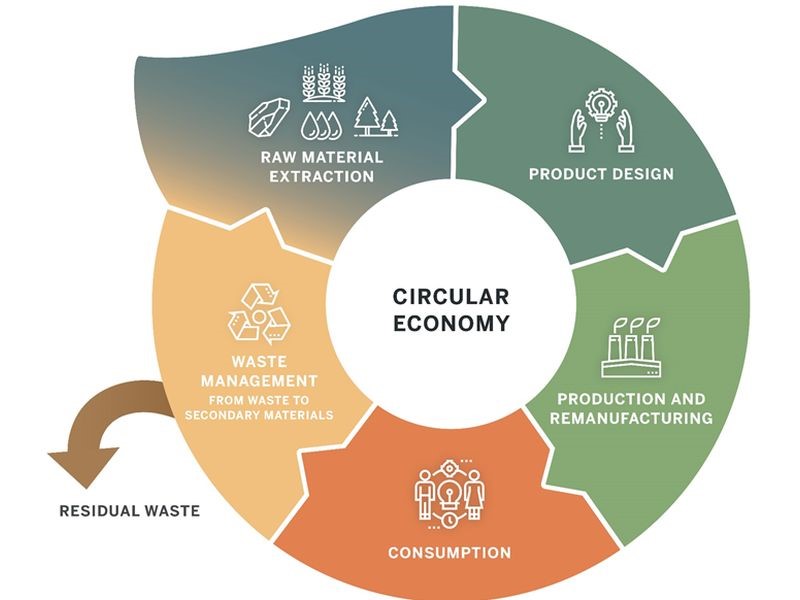
Another key objective of the EU's new economy plan is to promote sustainability across the region. This includes reducing greenhouse gas emissions, improving resource efficiency, and promoting circular economy principles.

To achieve this objective, the EU plans to implement several strategies, including investing in clean energy, promoting sustainable mobility, and supporting circular economy initiatives. The plan aims to invest in clean energy by increasing the use of renewable energy sources such as wind and solar power. The plan also aims to promote sustainable mobility by investing in public transportation and encouraging the use of electric vehicles.

To support circular economy initiatives, the EU plans to develop a comprehensive circular economy action plan that will promote the reuse, repair, and recycling of products and materials. The plan also aims to promote sustainable agriculture and reduce food waste.

Competitiveness

The third objective of the EU's new economy plan is to promote competitiveness across the region. This includes improving the business environment, promoting innovation, and strengthening the EU's industrial base.

To achieve this objective, the EU plans to implement several strategies, including simplifying regulations, reducing administrative burdens, and promoting entrepreneurship. The plan aims to promote innovation by increasing investment in research and development and supporting the development of new technologies.

The plan also aims to strengthen the EU's industrial base by promoting strategic sectors such as the automotive and aerospace industries. The plan aims to support the development of small and medium-sized enterprises (SMEs) by providing access to financing and supporting entrepreneurship.

Strategies of the EU's New Economy Plan

To achieve its objectives, the EU's new economy plan includes several strategies, which are discussed below.

Digitalization

Investing in digital infrastructure: The EU plans to invest in digital infrastructure by expanding high-speed internet and 5G networks across the region. The plan aims to ensure that all EU citizens have access to affordable, high-quality digital services.

Promoting digital innovation: The EU plans to promote digital innovation by increasing investment in research and development and supporting start-ups and SMEs. The plan also aims to create a favorable environment for digital innovation by promoting entrepreneurship and reducing administrative burdens.

Improving digital skills: The EU plans to improve digital skills by providing training and upskilling programs

Monday, May 8, 2023

Some major economic reforms of South Asia


South Asia is a diverse region consisting of eight countries, each with its unique economic history and challenges. Over the past few decades, several significant economic reforms have taken place in South Asia to boost economic growth, attract foreign investment, and reduce poverty. Here are some major economic reforms of South Asia:


  1. Economic liberalization: In the 1980s and 1990s, most South Asian countries embarked on economic liberalization programs. This involved reducing trade barriers, privatizing state-owned enterprises, and deregulating markets. India, for example, implemented a series of economic reforms in 1991 that led to increased foreign investment, higher economic growth, and reduced poverty.

  2. Microfinance: Microfinance has played a significant role in reducing poverty and empowering women in South Asia. Microfinance institutions provide small loans to poor individuals who do not have access to traditional banking services. The Grameen Bank in Bangladesh is one of the most well-known microfinance institutions in the world.

  3. Infrastructure development: South Asian countries have made significant investments in infrastructure development, including transportation, energy, and telecommunications. For example, India has invested heavily in its road network, and now has one of the largest road networks in the world. Pakistan has invested in the construction of the China-Pakistan Economic Corridor (CPEC), which will connect China's western province of Xinjiang to Pakistan's Gwadar port.

  4. Tax reforms: Several South Asian countries have implemented tax reforms to increase revenue collection and reduce tax evasion. Sri Lanka, for example, introduced a value-added tax (VAT) in 2002, which has helped to increase revenue collection and reduce reliance on direct taxes.

  5. Foreign investment: South Asian countries have increasingly opened up to foreign investment in recent years. This has led to the establishment of several special economic zones (SEZs) to attract foreign investors. India's SEZs have been particularly successful, with several multinational corporations setting up operations in these zones.

Overall, South Asia has made significant progress in implementing economic reforms over the past few decades. However, there is still a long way to go, particularly in reducing poverty and improving living standards for all citizens.

Monday, May 1, 2023

Economy of North Korea

 North Korea is a highly secretive and isolated country, and as such, reliable information about its economy and budget is difficult to come by. The country's economy is centrally planned and heavily controlled by the government, which owns and operates most of the major industries. North Korea is heavily reliant on foreign aid, particularly from China, and has struggled with economic sanctions imposed by the United States and other countries.


In 2020, North Korea reportedly had a budget of around $5.5 billion, with the majority of this funding allocated to military spending. The country's military is a top priority for the government, and it has invested heavily in developing nuclear weapons and ballistic missiles. Other government priorities include maintaining control over the population and supporting the ruling elite.

North Korea's economy is highly dependent on its natural resources, including coal, iron ore, and minerals. The country also exports textiles, seafood, and other products to earn foreign currency. However, the economy is highly centralized, and most economic activity is controlled by the government. Private enterprise is limited, and foreign investment is heavily restricted.

Overall, the North Korean budget is highly secretive and difficult to assess with any degree of accuracy. The country's economy is heavily controlled by the government, and it has struggled with international sanctions and a lack of foreign investment.

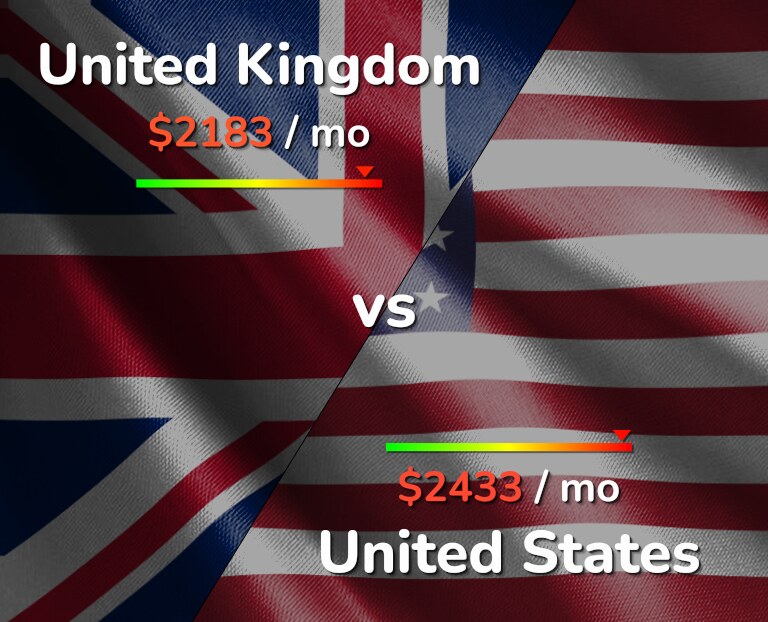
United Kingdom vs United States Economy Stats Compared

 The United States is the world's largest economy and the federal government's budget for the 2021 fiscal year was $4.8 trillion. In contrast, the United Kingdom's economy is much smaller and its budget for the same period was £909 billion (approximately $1.2 trillion USD). However, the UK's population is only about 20% of the US population, so on a per capita basis, the UK's budget is actually larger than the US budget.


The US budget is divided into three main categories: mandatory spending, discretionary spending, and interest on the national debt. Mandatory spending includes programs like Social Security, Medicare, and Medicaid, which are required by law to be funded at specific levels. Discretionary spending includes programs like defense, education, and infrastructure, and can be adjusted each year by Congress. Interest on the national debt is the amount of money the government pays to service its outstanding debt.

In the US, mandatory spending accounts for the largest portion of the federal budget, at about 60% of total spending. This is due to the large and growing costs of programs like Social Security and Medicare, which support the country's aging population. Defense spending is the next largest category, at about 15% of total spending, followed by discretionary spending on programs like education, infrastructure, and environmental protection.

In contrast, the UK's budget is divided into five main categories: health, social protection, education, public order and safety, and other areas. Health is the largest category, accounting for about 20% of total spending, followed by social protection, which includes programs like unemployment benefits and pensions. Education accounts for about 10% of total spending, while public order and safety, which includes spending on police and the justice system, accounts for about 6%.

In terms of taxation, the US generally has lower tax rates than the UK, but a more complex tax code with more deductions and exemptions. The UK generally has higher tax rates but a simpler tax code. In the US, the federal government collects income taxes, payroll taxes, and excise taxes, among others. In the UK, income tax, national insurance contributions, and value-added tax (VAT) are the main sources of revenue.

Overall, while the budgets of the US and UK have some similarities in terms of their priorities and allocations, they are also significantly different due to the countries' differing populations, economies, and political structures. The US budget is dominated by mandatory spending on entitlement programs like Social Security and Medicare, while the UK budget focuses more on healthcare and social protection. The US also generally has lower tax rates than the UK, but a more complex tax code.

Harry Potter

 The Dark Lord Ascending T he two men appeared out of nowhere, a few yards apart in the narrow, moonlit lane. For a second they stood quite ...